Introduction: More Than a Coaching Change
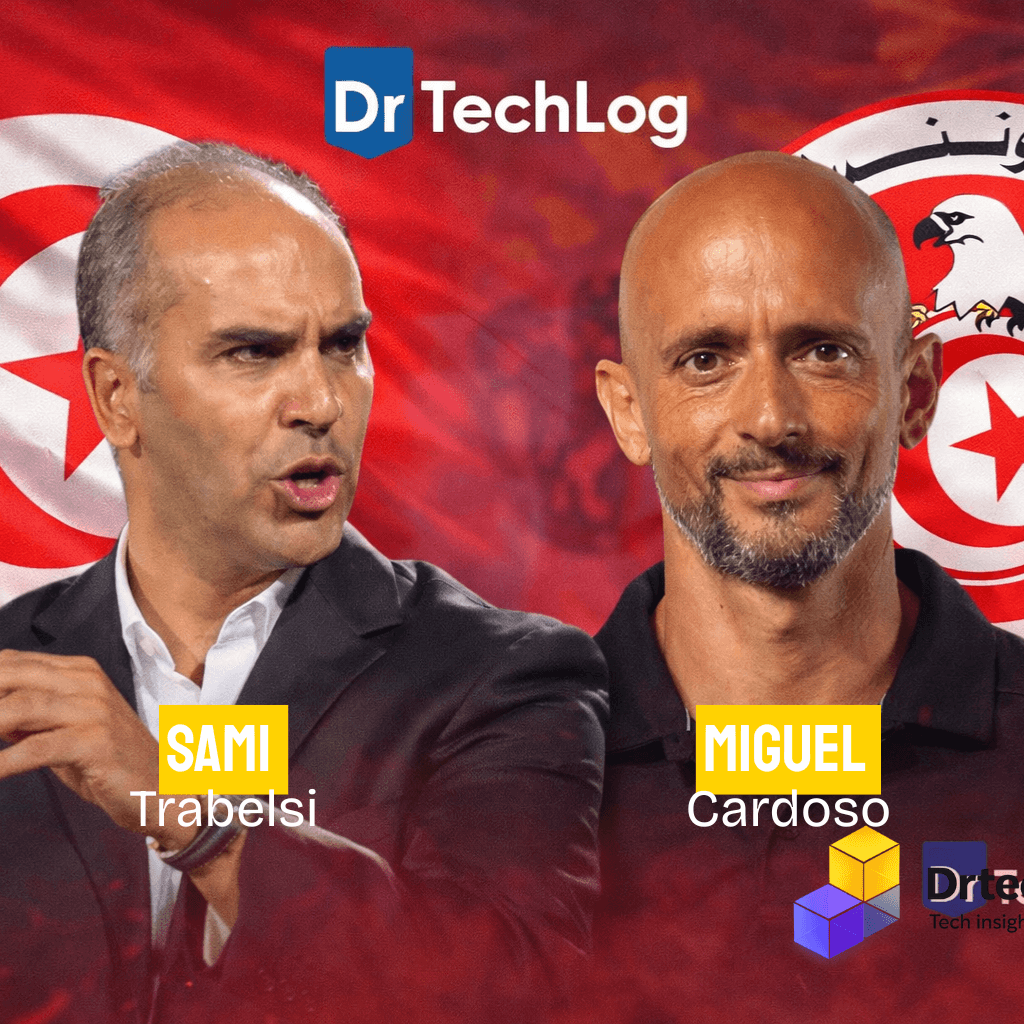
When Tunisia announced the appointment of Miguel Cardoso as the new head coach, replacing Sami Trabelsi, the news was initially treated as a standard football headline. A foreign coach. A familiar cycle. A new name.
But beneath the surface, this decision represents something far more significant.
For a football nation long associated with experience-driven leadership and pragmatic decision-making, the choice of Miguel Cardoso signals a shift in mindset — one that aligns more closely with modern, analytical, and data-informed thinking.
This is not just about football.
It is about how systems evolve, how institutions react to pressure, and how leadership models adapt in an era dominated by data, structure, and long-term planning.
At DrTechLog Insights, we look beyond headlines. This article explores what Miguel Cardoso’s appointment really tells us about the direction of Tunisian football — and why this moment matters.
Who Is Miguel Cardoso — Beyond the CV
Miguel Cardoso is often introduced through a familiar list: Portuguese coach, European experience, stints across multiple leagues. While accurate, this description misses the point.
Cardoso belongs to a generation of coaches shaped by:
- tactical periodization
- positional play
- performance analysis
- structured training methodologies
Unlike traditional coaches who rely primarily on intuition and experience, Cardoso represents a system-first approach. His teams are built around:
- predefined patterns
- spatial discipline
- collective behavior over individual improvisation
This makes him less charismatic in public discourse — but potentially more impactful inside an organization.
In short: Cardoso is not a motivator-first coach. He is a process architect.
From Sami Trabelsi to Miguel Cardoso: Two Philosophies, One Turning Point
To understand the importance of this appointment, we must compare what came before.
Sami Trabelsi: Experience and National Identity
Sami Trabelsi symbolized continuity.
He understood the local context, the players, the pressure, and the expectations. His leadership was grounded in:
- personal experience
- emotional intelligence
- situational pragmatism
This model prioritizes short-term balance and adaptability.
Miguel Cardoso: Structure and Predictability
Cardoso represents a different philosophy:
- predefined systems
- repeatable patterns
- long-term identity
Rather than reacting to opponents, his model aims to control variables.
The Real Insight
This transition reflects a deeper institutional question:
Is Tunisian football ready to move from experience-based leadership to system-based leadership?
The answer will define more than just match results.
Football as a System: Why This Decision Feels “Technological”
In technology, progress rarely comes from improvisation. It comes from:
- frameworks
- architecture
- scalability
Modern football operates the same way.
Cardoso’s methodology mirrors how successful tech organizations function:
- clear structure
- defined roles
- measurable performance indicators
This alignment explains why his appointment resonates beyond sport. Tunisia is not just hiring a coach. It is experimenting with a new operating system.
And like any system upgrade, the risks are real.
The Data-Driven Coach in a Results-Driven Environment
Here lies the central tension.
Miguel Cardoso’s model requires:
- time
- trust
- stability
Tunisian football culture, however, is shaped by:
- immediate expectations
- public pressure
- limited patience
This is where many data-driven projects fail — not because the system is flawed, but because the environment rejects delayed gratification.
The real challenge is not tactical.
It is organizational maturity.
What Success Would Actually Look Like (Beyond Wins)
If success is measured only by results, this project may appear fragile.
But if evaluated correctly, success should include:
- visible playing identity
- improved positional discipline
- reduced reliance on individual moments
- tactical consistency across matches
In technology terms, this is not about launching a viral product.
It is about building reliable infrastructure.
Risks, Friction, and Cultural Resistance
No transformation comes without resistance.
Key Risks:
- player adaptation to rigid systems
- media misinterpretation of “boring” football
- short-term losses undermining long-term goals
Cardoso’s style is not designed to entertain immediately. It is designed to optimize over time.
This creates friction in environments driven by emotion rather than metrics.
Why This Appointment Matters Beyond Tunisia
African and Middle Eastern football federations increasingly face the same dilemma:
- stick with familiarity
- or invest in systems
Tunisia’s decision places it at a crossroads.
If successful, this could:
- influence regional coaching strategies
- encourage investment in analytics
- normalize long-term thinking in football governance
If it fails, it will reinforce skepticism toward “modern” methodologies.
Insights for Leadership Beyond Football
This story extends far beyond the pitch.
Organizations across industries face the same question:
Do we trust systems, or do we rely on individuals?
Miguel Cardoso’s appointment is a live case study in:
- change management
- leadership transition
- system adoption under pressure
These are challenges faced by startups, governments, and enterprises alike.
Conclusion: A Test of Readiness, Not Just Coaching
Miguel Cardoso is not the experiment.
Tunisian football is.
This appointment tests whether institutions are ready to:
- tolerate uncertainty
- prioritize structure over instinct
- accept delayed rewards
Regardless of outcomes, this decision marks a moment of intellectual honesty — an acknowledgment that progress requires evolution.
At DrTechLog Insights, we believe such moments deserve analysis, not noise.



Leave a Reply