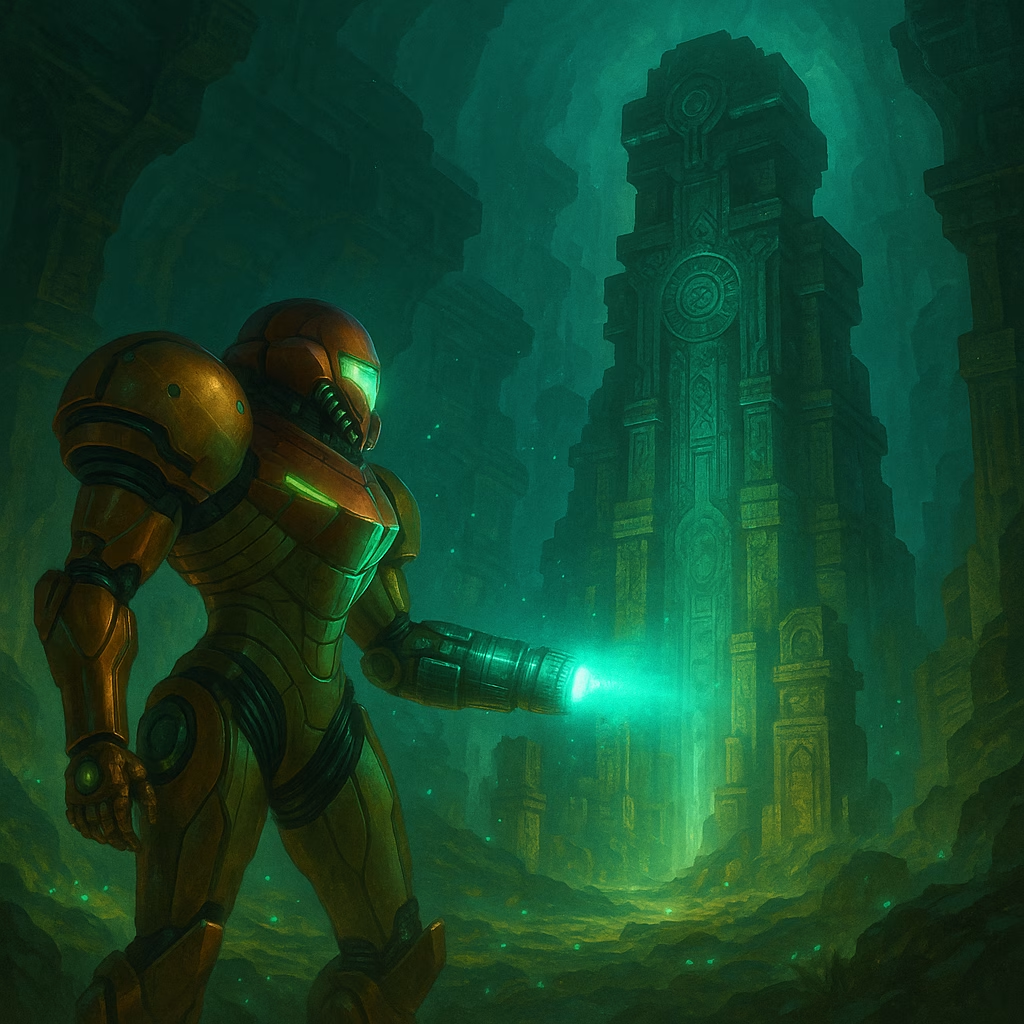
Introduction: The Prime of Retro’s Innovation
When Metroid Prime launched in 2002, it wasn’t just another video game—it represented a bold evolution in interactive storytelling. Retro Studios, in partnership with Nintendo, crafted a first-person experience that told a compelling story without relying heavily on dialogue or cinematic cutscenes. The result was an immersive adventure that combined cutting-edge technology, smart design, and artistic finesse.
Today, as computing and information technology advance at an unprecedented pace, Metroid Prime remains a masterclass in how games can blend visuals, interactivity, and narrative, offering lessons for developers, designers, and tech enthusiasts alike.
From Pixels to Immersion: The Development History
Bringing Metroid into 3D was no small feat. Retro Studios faced the challenge of translating a beloved 2D franchise into a fully realized 3D universe, maintaining the tension, exploration, and atmosphere fans loved.
Key development highlights:
- Lighting & Textures: Retro Studios pushed the GameCube hardware with dynamic lighting and texture mapping, creating environments that felt alive rather than flat.
- Performance Optimization: Careful management of polygons, draw distances, and frame rates ensured smooth gameplay even in complex areas.
- Tech Meets Design: The studio integrated art and tech decisions seamlessly, demonstrating how game development overlaps with IT and visual computing.
This balance of technical innovation and artistic vision made Tallon IV not just a setting but a living world that responded to players’ actions.
Designing the Techlog Experience: Gameplay as Exploration
The term “techlog” is apt when describing Metroid Prime’s design. Players don Samus Aran’s scan visor to investigate environments, gather clues, and decode alien technology. This interactive discovery system mirrors how IT professionals analyze systems—observing patterns, gathering data, and drawing insights.
Key design choices include:
- Minimal Guidance: No quest markers or forced dialogue; players learn by scanning, observing, and exploring.
- Intuitive Interfaces: The scan visor, item pickups, and feedback cues allow players to interact naturally with the world.
- Immersive Interaction: Exploration is both gameplay and narrative, making players active participants in the story.
Visual Storytelling in a Tech World: The Artistic Philosophy
Tallon IV isn’t just a backdrop—it’s a narrative device. Every ruin, laboratory, and alien structure communicates story elements visually:
- Environmental Context: Architecture and textures reveal the history of the Chozo civilization.
- Ambient Sound & Lighting: Natural soundscapes and subtle lighting cues evoke emotion and guide player attention.
- Color Palettes: Distinct palettes differentiate biomes and mood, creating a dynamic emotional experience.
This approach integrates visual computing techniques into interactive storytelling, showing that technology can enhance artistic vision.
Samus and the Chozo: Lore Through Environmental Logging
Metroid Prime pioneered environmental logging to convey lore:
- Players use the scan visor to uncover artifacts, logs, and alien messages.
- The Chozo civilization’s history, warnings about Phazon, and ecosystem details are revealed gradually, encouraging active learning and exploration.
- This method mirrors IT diagnostics: piecing together data to understand complex systems.
By immersing players in investigative discovery, Retro Studios transformed gameplay into a form of interactive research.
Technical Innovations Worth Noting
- Real-Time Physics & Collision Detection: Early integration of physics made environments feel responsive.
- Adaptive AI: Enemy behavior changed based on player actions, enhancing immersion.
- Scan-Based Interaction: Innovative scanning technology added a layer of analytical gameplay, combining story and tech seamlessly.
- Optimized 3D Rendering: Clever resource management allowed for detailed textures and expansive worlds on GameCube hardware.
Legacy in Visual Computing and Game Design
Metroid Prime continues to influence:
- UI/UX Design in Games: Its clean HUD and feedback systems remain benchmarks for intuitive interfaces.
- Interactive Storytelling: Games like Dead Space and Hollow Knight adopt similar environmental storytelling techniques.
- Educational Contexts: Design schools and IT programs study its integration of technology, art, and narrative as a model of immersive experience.
Conclusion: Where Technology Meets Emotion
Metroid Prime proves that technology and storytelling are not separate disciplines. With smart design, a game can educate, inform, and emotionally engage players simultaneously. Retro Studios’ masterpiece remains a testament to how interactive media can combine art, technology, and emotion, inspiring both gamers and developers decades after its release.
Coming soon on Dr Tech Log: more articles exploring how games leverage technology to create unforgettable experiences.



Leave a Reply